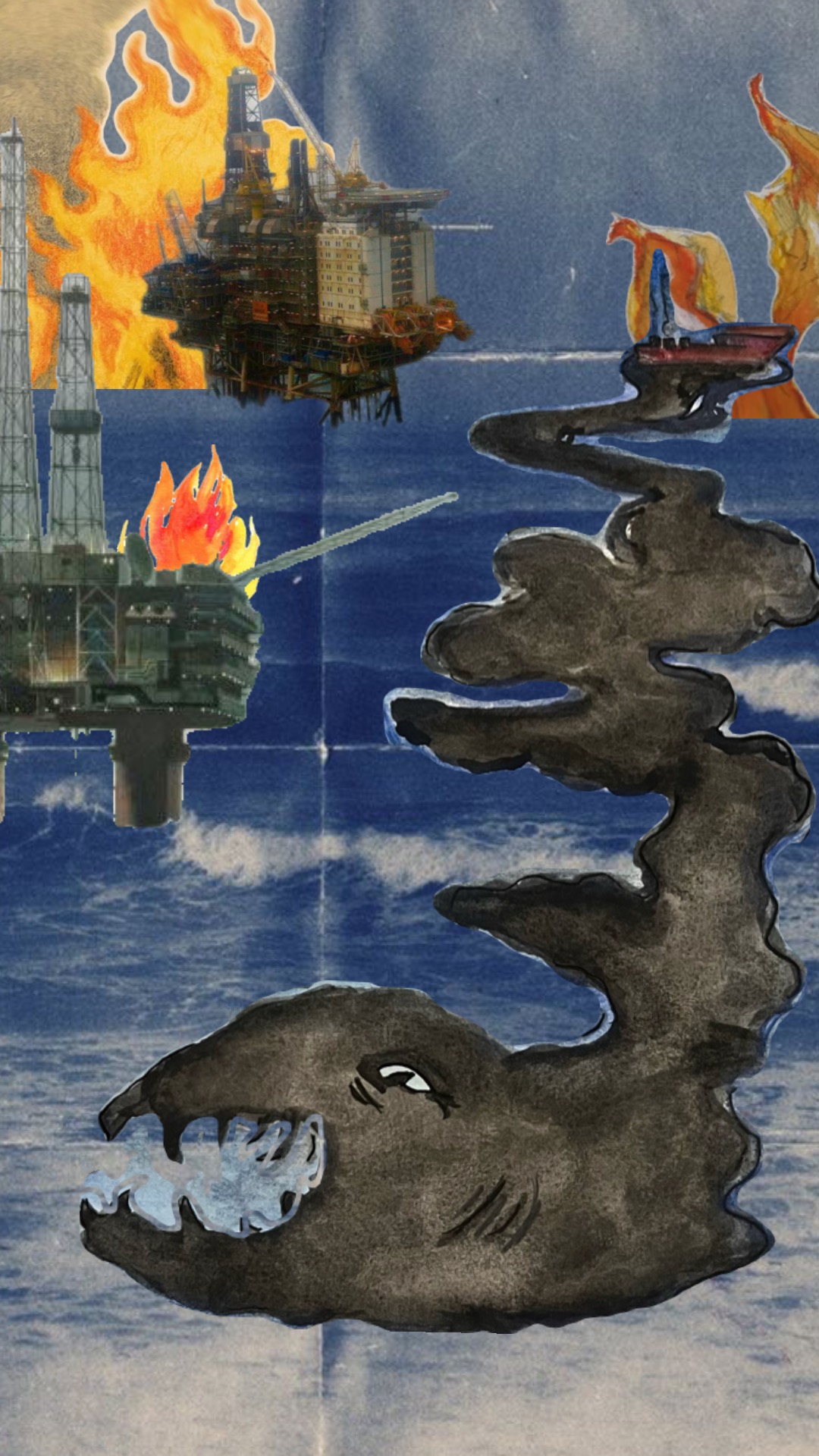
One year ago, a pressing question hung in the air: would we passively accept the trajectory of the United States’ environmental future, or fight it? At the time, the question felt urgent yet uncertain. Donald Trump had just been elected to a second term. Environmental advocates warned of rollbacks and retreat in environmental policies and efforts. Supporters promised energy dominance and economic revival. The country entered a new phase of anticipation.
Now, twelve months into his presidency, the speculation phase is over. Policies are in motion, agencies are reshaped, funding streams have shifted, and the environmental future many predicted is beginning to materialize, though not entirely in the ways expected. It is not just about what changed at President Trump’s administrative level; it is about how those changes ripple outward into permitting regulations, consulting firms, public lands, and the career paths of students trying to decide the kinds of future they want to build.
Since January 20, 2025, the Trump administration has moved quickly to transform federal environmental priorities. Unspent portions of the Inflation Reduction Act (IRA) have faced rescission efforts. Federal renewable energy permitting has slowed under revised review procedures. New oil, gas, and mineral lease sales have expanded across federal lands.
At the Department of Energy, Secretary Chris Wright has emphasized fossil fuel production and grid reliability, which is the stability of the nation’s electricity system and its ability to consistently deliver power to homes and businesses, over decarbonization. This is quite different from former President Biden’s Secretary of the Department of Energy, Jennifer Granholm, who prioritized decarbonization and clean energy expansion. Staffing reductions and budget freezes across federal agencies have reduced inspection capacity and slowed regulatory review. On paper, these are policy shifts. On the ground, they translate into delay.
An interview with a senior project manager working at a California-based environmental science, geology, and engineering firm, provides key insight to better understand how these federal shifts are playing out on the ground.
“There have been a number [of] changes to environmental policy resulting from the new administration,” she says. “A big one that is affecting the types of Projects that we work on is SB 237, which revises the 2025 Kern County Oil and Gas Ordinance and CEQA requirements. The idea is to streamline the permitting and environmental review process for operators in Kern County.” Streamline being the operative word. The goal is speed, but in environmental regulation, speed rarely comes without sacrificing either efficiency or ethical responsibility.
“We aren’t sure yet if that will actually make things faster since we haven’t gone through the new process yet,” she says. “But it has resulted in many operators pulling back old applications and CEQA documents to participate in the new process.” The contradiction is clear: in attempting to accelerate development, the system has temporarily slowed.
Campaigns often promise big changes, but environmental work depends on staff, databases, and review schedules, which are the quieter mechanisms of government. “The effects we are seeing are due to layoffs or hiring freezes, as well as the long government shutdown that makes any agency, Federal agency consultations or review times much slower than they used to be,” she adds. “That slowdown creates a longer waiting period for required agency input and permits.” In other words, fewer people reviewing more projects.
“There are also several Federal databases that we routinely utilized for research that are no longer active or funded,” she continues. The impact isn’t so much fewer rules as it is slower oversight. And in environmental work, time is often the difference between precaution and consequence.
One of the clearest predictions last year was an expansion of fossil fuel development. That prediction has largely held. Expanded lease sales and permitting changes have increased exploration in certain regions. Supporters frame it as energy independence. Critics call it backsliding. But not all sectors are moving in the same direction.
“All wind projects are seeing a slowdown or pause due to the current administration’s stance on renewable energy,” she says. The contrast is stark: fossil fuel projects continue to receive permits, while wind energy developments face delays. The energy transition isn’t reversing overnight, but its momentum has slowed, and when momentum slows, investment often hesitates.
In public debate, energy policy often focuses on what gets built. Less attention is paid to what must be dismantled. Decommissioning, the retirement and cleanup of wells, pipelines, and industrial sites, is an unglamorous but essential part of environmental protection. It is also heavily regulated in California. “In California, permitting for anything, including decommissioning, is always a challenge because we have such robust laws and oversight,” she says. “However, as mentioned above, lack of staff and changing policies/procedures have made things a bit slower.” Slower permitting means slower cleanup, and slower cleanup means extended environmental liability.
Meanwhile, companies are adjusting their plans; some are not hiring and others are waiting for clearer rules. The uncertainty in policy is starting to affect environmental decisions. Would environmental careers dry up? Would clean energy jobs vanish? A year later, the answer is more complicated.
“I would say that environmental sciences positions are still in need,” she says. “But I’ve seen a slowdown or layoffs in regulatory positions due to budget cuts or freezes.” The field isn’t collapsing, but it is undergoing a period of adjustment, responding to policy shifts, market pressures, and evolving industry needs. Environmental science is broad: remediation, consulting, compliance, data analysis, and planning to name a few areas. But federal employment appears less stable than before. “Environmental science includes so many facets that I would say yes, of course, it is still a degree that is very employable,” she says. Then she adds a note of realism. “However, keep in mind that the field is changing rapidly with the inclusion of AI and other research assistants, so careers that cannot be replaced by technology are probably a smarter bet for the future. Also, private consulting may be more stable as opposed to government jobs.” For students at UC Berkeley and beyond, the message is not to retreat but to adapt.
As seen when conservative presidential candidates are elected: if federal policy leans one direction, California often leans towards the other. “Probably just an increase in local regulations,” she says when asked about California’s response to federal rollbacks. “In some communities I have seen a direct opposition to what is being promoted federally,” she says, pointing to the example of Santa Barbara County’s vote to phase out new oil drilling. This push-and-pull dynamic defines much of the current environmental landscape. Federal expansion meets state restriction, and the gap between federal and state environmental standards is widening. Whether that gap creates resilience or fragmentation remains to be seen.
Beyond individual projects and permitting delays lies a larger concern. When asked what worries her most after a year of policy change, she answers simply: “A myopic view of energy assets necessary to support growing needs.” The word myopic suggests short-term thinking. Immediate output over long-term planning, present supply over future resilience.
After twelve months, several early predictions were accurate. Fossil fuel expansion has advanced, renewable energy faces federal challenges, enforcement has slowed through staffing cuts and shutdowns, and state-level resistance has intensified. Still, the situation isn’t one of total reversal. Much of the IRA funding had already been obligated, clean energy has not disappeared, environmental consulting remains active, and California continues to legislate aggressively.of miles
Policy is rarely a single swing of a pendulum. It is friction between levels of government, between industry and regulation, between present needs and future risks. If there is one takeaway from this first year, it may be this: environmental governance is more fragile than many assumed, but also more decentralized. The federal government sets the direction, states guide how it’s carried out, markets shape what’s possible, and scientists and consultants turn policy into action. And citizens, especially young ones, decide whether to disengage or lean in. “Understand that California has always been a leader in environmental policy,” she says. “And although there is instability and conflicting science at the Federal level, State and local policies can still provide a lot of influence over what happens in a community. So, stay involved and informed!”
One year ago, the environmental future felt uncertain. Today, it feels contested. The Trump administration has moved decisively, but so have states. The next three years will determine whether this first year marks a temporary redirection or a deeper structural shift. Energy transitions do not happen in a straight line, and neither does environmental policy. The question now is no longer what might happen. It is what we will do with what is happening.


