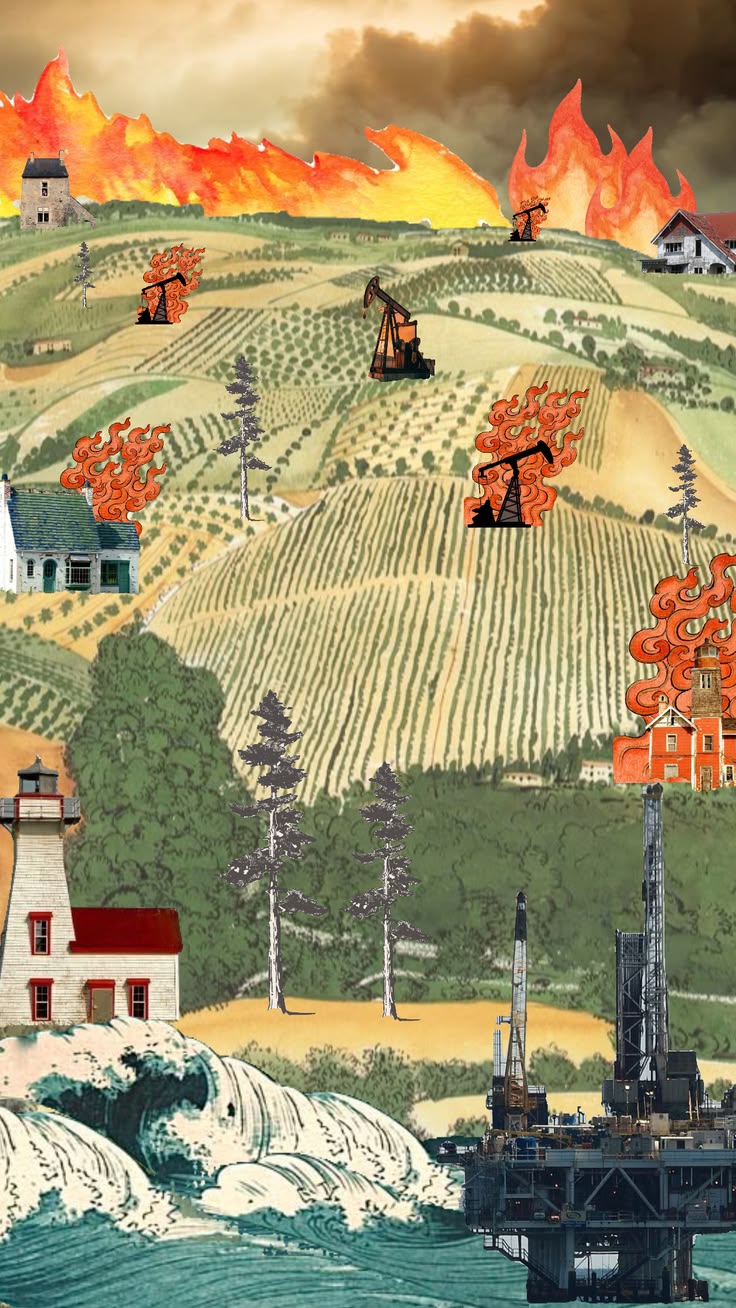
A couple of miles off the coast of Santa Barbara in 1969, on a Union Oil offshore drilling platform, an underwater valve faced a mechanical failure from a poorly reinforced well. Over the course of the next year, 3 million gallons of oil poured out of the faults in the seabed directly into the Pacific Ocean. The oil slick coated the surface of the water reaching the Channel Islands and washing up on the shores of Santa Barbara, accruing both environmental and material costs.
Marine life suffered heavily, including a death toll of almost 4,000 seagulls and grebes. The clean-up cost $4.5 million dollars and garnered attention as the worst offshore oil spill in America at the time, and to this day holds the ranking as the worst oil disaster off the coast of California. A barrage of environmental legislation followed, including the Clean Air Act and the Clean Water Act, and most notably, the establishment of the Environmental Protection Agency, indicating a more sincere commitment to the defense of natural resources.
Two years later, the 1971 San Francisco Bay oil spill caused 800,000 gallons of oil to pour into the bay. Causing over $1 million in damages, the oil threatened environmental health and multiple species of marine life in the Bolinas Bay. To prevent another disaster, the expansion of offshore drilling in California was prohibited in 1994, under the California Coastal Sanctuary Act.
The development of new offshore oil wells was paused in 2021 and again in 2024 under the Biden administration. In a stark reversal of previous policy, the second Trump administration quietly invited private energy companies to nominate areas off the Pacific Coast for potential sale by auction in early November 2025. These auctions would occur sometime in 2027 and allow for new leases of federal waters for the purpose of offshore drilling.
The push for an expansion in offshore drilling has become the centerpiece to this administration’s plan for the US to become a major oil producer. During both administrations, the Department of the Interior, currently led by Secretary Doug Burgum, has been committed to the expansion of oil drilling and energy infrastructure. Oil from federally owned water makes up 14% of the country’s oil exports. In Executive Order 14154, the Trump administration emphasized the importance of affordable, American oil, reinforcing a lasting commitment to fossil fuel burning energy sources. The proposed 5-year plan, released by the Bureau of Ocean Energy Management (BOEM), would open 1.27 billion acres of federal water to expand offshore drilling which essentially opens up all US coastal water and shorelines to drilling. The bidding will be open for private oil companies, followed by a 45-day comment period. As of 2024, previous leases covering 12.1 million acres across the Atlantic and Pacific Ocean and the Gulf of Mexico, provided the US Treasury with $7 billion annually.
The ocean’s natural gas and oil reserves have been exploited by global energy powers like the United States for decades. The California coast specifically is “chock full of oil” says Dr. James Rector, a professor in the department of Civil and Environmental Engineering at UC Berkeley.
“The reason that California…is so oil rich, is a confluence of events. But it really starts with the San Andreas fault. The proximity to the San Andreas fault and the deposition of very organic rich sediments, millions of years ago, creates a situation where even today, all kinds of new oil is being generated at depth and gradually migrating due to buoyancy and pressure upwards toward the surface,” he explains.
Oil companies typically send out vessels to complete geographical surveys of the seafloor to find these reserves of oil. Once Mobile Offshore Drilling Units (MODUs) have been sent out and determined the location of the oil reserve, companies typically establish more permanent oil production rigs. Once a MODU has located the exact location of the oil field, a drill is lowered by a team of engineers, along with a blowout preventer that is meant to close off the pipe in the event of an uncontrolled release of pressure from the seabed. These drills operate at extreme pressure in ultra-deepwater under regulations that are meant to limit the threat to public safety. Typically, offshore oil rigs remain operational for 20-30 years, or as long as it is financially viable for the well to remain open.
Although there have been strides in improving the efficiency and lowering its impact, oil production and treatment is still the single greatest contributor to methane emissions. Methane is a greenhouse gas with a short life in the atmosphere but has 25 times more global warming potential than carbon dioxide. This pollution is a natural byproduct of vented emissions from drilling platforms but can also be caused by faulty equipment or leaks. In 2023, offshore oil production alone was responsible for 6.8 million metric tons of emissions of carbon dioxide equivalent.
California is unique due to the amount of natural seeps that exist due to natural faults in the seabed. This light, buoyant oil floats to the top of the water and creates a slick, causing a localized catastrophe for the marine life in that area. The solution, Professor Rector says, is to “produce oil where it is causing these seeps.” By domestically producing oil, we could reduce the cost, both material and environmental in terms of carbon emissions, of oil production while we are still reliant on them. But, California is still the eighth largest crude oil producer in the country and made up 2% of the entire nation’s oil production. The crude oil generated locally, even if it is mined with minimal emissions, is almost solely used for transportation, in the form of gasoline. In a state as large as California, those transportation emissions account for roughly half of all greenhouse gas emissions in the state.
Another major problem that is associated with drilling for oil is the waste water produced from hydraulic mining. Offshore coalbed methane mining and hydraulic fracturing (commonly referred to as fracking) produce waste water when being pumped away from the well in order to reduce pressure. The water is then treated, pumped to the surface, and diverted for use in other places, such as irrigation projects. There is a general lack of information regarding the safety of the treated water for human use and the EPA has expressed concern that the chemicals in use do not have a standard of treatability. Chemical compounds often used in hydraulic fracking are treated as proprietary information and not disclosed by the oil companies. The EPA still does not have guidelines for the safety of aboveground water pumping due to the unknown toxicity and danger to marine and human life. Oil exploration and drilling deposits heavy metals into the ocean which can be carried away by environmental actors and contaminate groundwater. The severe risk that heavy metals and hydrocarbons, including benzene and asbestos, pose is well documented and they are currently classified as carcinogens. These are chemicals that workers in the oil and petroleum industry are consistently exposed to. Studies have found that living upstream from oil wells can lead to health risks like cancer and liver disease. Heavy metals have the potential to leach into soil and groundwater posing a risk to community’s food and water supplies.
The recent broad push for greater production of fossil fuels, increasing drilling, and the removal of environmental protections comes at what seems like a tipping point. Extreme weather events, higher global temperatures, melting glaciers; these are all events that we’ve seen happening more and more frequently as a result of anthropogenic climate change as a result of little to no comprehensive and collective climate change mitigation.
Scientists have been ringing alarm bells for years and emphasized the necessity for swift and drastic change. There is no silver bullet to emissions reduction or climate change mitigation; stopping the incredibly lucrative and now incentivized business of offshore drilling immediately, while appealing, isn’t feasible. Starting the energy transition now and sooner rather than later is crucial in order to set up a framework for movement away from reliance on burning fossil fuels. Without a serious commitment to collective action to reducing global carbon emissions, anthropogenic climate change will only hurt more vulnerable communities and destroy natural resources. The actions of an administration such as this one begs the question of what the consequences for a constant need for more oil will have on a world of finite resources.


